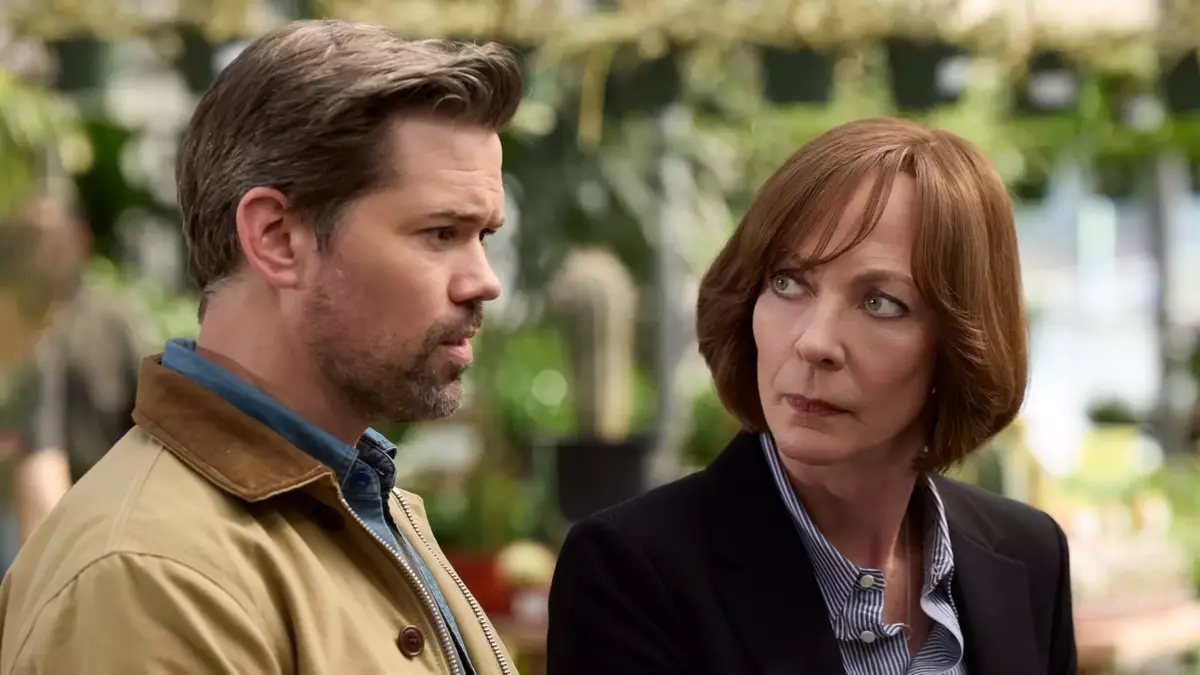
"Miss You, Love You," an HBO film starring Allison Janney and Andrew Rannells, delves into the intricate and often awkward process of shared mourning between two strangers. The narrative skillfully unpacks the nebulous nature of their relationship, highlighting how their individual losses intertwine to form an unexpected bond. While the film attempts to capture the raw, unfiltered emotions associated with grief, its deliberate, almost theatrical presentation sometimes detracts from the genuine impact these sentiments could have. The story reveals the hidden layers of sorrow and the unexpected comfort found in a new, unconventional connection.
The film's strength lies in its profound exploration of how grief shapes individual perceptions and relationships. The characters' journey through loss is not a linear path, but a winding road of confusion, resentment, and tentative understanding. The dynamic between Janney and Rannells’ characters provides a compelling study of how two disparate individuals, linked by a tragic event, can slowly peel back their emotional defenses to reveal a shared vulnerability. This exploration of human connection amidst profound sadness is both insightful and moving, even if the directorial choices occasionally create a distance between the audience and the characters’ inner worlds.
The Intricate Dance of Shared Sorrow
The initial encounters between Jamie and Diane are shrouded in a deliberate ambiguity, leaving both the characters and the audience to piece together the exact nature of their connection. This narrative choice, though initially perplexing, effectively mirrors the disorienting experience of grief itself. Diane, recently widowed, finds herself relying on Jamie, her absent son's assistant, for support during a time of immense vulnerability. Their interactions, marked by Diane's sharp wit and Jamie's persistent compassion, gradually illuminate the unspoken rules and emotional boundaries they navigate. The film carefully constructs this evolving relationship, allowing their individual histories and emotional scars to surface through their tentative conversations and shared silences.
As the story unfolds, the underlying reasons for Jamie's presence in Diane's life become clearer. Diane's husband of 24 years has passed, leaving her in a state of profound emotional isolation, exacerbated by her son's absence. Jamie, acting as a proxy for her son, attempts to assist with the funeral arrangements, but his efforts are met with Diane's defensive demeanor. Her grief has manifested as prickliness and a reluctance to accept comfort, making their interactions a delicate dance of empathy and resistance. Despite Jamie's earnest attempts to provide solace, Diane's unresolved emotions and her complex relationship with her son create an emotional barrier that both challenges and deepens their unexpected bond, forming the core of the film's poignant narrative.
Performance and Presentation: A Theatrical Approach to Raw Emotion
Allison Janney delivers a compelling performance as Diane, perfectly embodying a woman whose grief has made her both brittle and fiercely independent. Her portrayal captures the nuanced complexities of a character grappling with profound loss, using subtle gestures and sharp dialogue to convey Diane's emotional state. Andrew Rannells complements this with a portrayal of Jamie that is equally layered, showcasing a character whose determined empathy often borders on desperation. Their chemistry on screen, though not romantic, is a testament to the power of human connection forged in adversity. The interplay between their distinct personalities creates a believable and moving dynamic that drives the film's emotional core.
The film's theatrical sensibility, while contributing to its unique aesthetic, sometimes creates a noticeable distance from the raw emotions it seeks to portray. The dialogue, at times, feels overly scripted, resembling stage monologues more than natural conversations. This stylized approach, along with precise blocking and cinematography, emphasizes clarity and intellectual understanding over visceral emotional resonance. While this might be a deliberate choice to highlight the performative aspects of coping with grief, it occasionally prevents the audience from fully immersing themselves in the characters' pain. Nevertheless, the compelling performances by Janney and Rannells manage to transcend these stylistic choices, offering a thoughtful, if occasionally mannered, exploration of loss and the unexpected paths to healing.