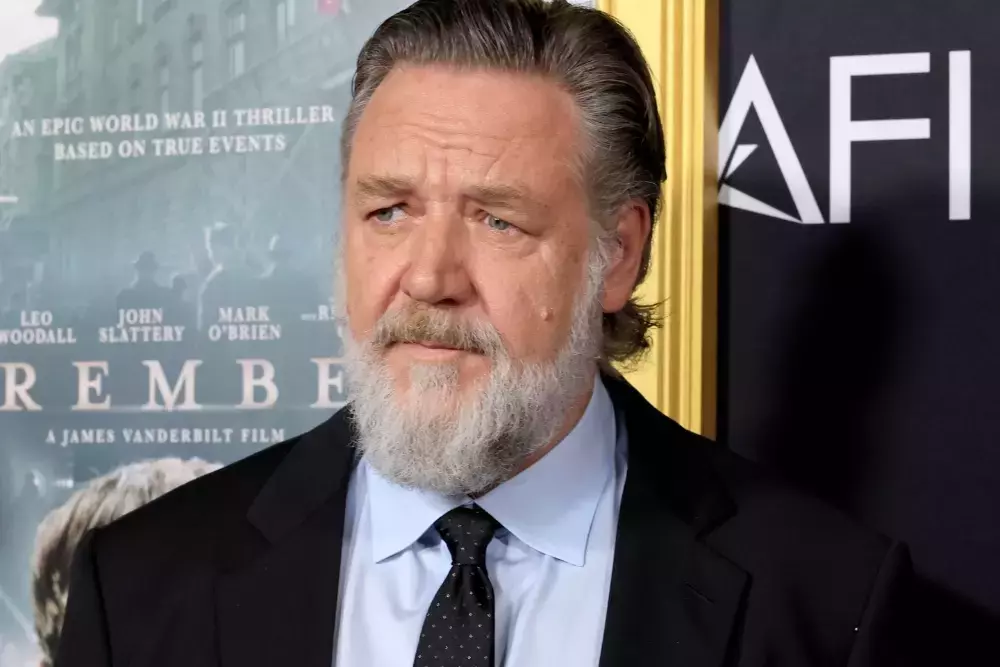
Russell Crowe recently demonstrated a firm approach to managing fan interactions in Paris, setting boundaries for autograph seekers outside his hotel. His clear instructions on respectful conduct highlight a growing trend among public figures who aim to maintain order and personal space in public encounters. This incident, along with a similar one involving Anne Hathaway, underscores the challenges celebrities face in balancing fan engagement with personal safety and privacy.
The actor's proactive communication and subsequent social media clarification shed light on the nuances of celebrity-fan dynamics and media portrayal. These events prompt reflection on how such interactions are perceived and managed, emphasizing the importance of mutual respect. Crowe's actions serve as a notable example of a celebrity taking charge of their personal space while still engaging with their admirers, providing valuable insight into the evolving landscape of public figures' interactions with their fanbase.
Russell Crowe's Direct Appeal to Fans
In a notable incident in Paris, actor Russell Crowe directly addressed a crowd of autograph seekers outside his hotel, laying down clear rules for their behavior. He explicitly warned fans not to push or become disruptive, stating that any inappropriate conduct would result in his immediate departure. Crowe made it clear that if attendees remained orderly, he would make an effort to sign autographs and take selfies with everyone present. This pre-emptive communication aimed to manage expectations and ensure a more controlled and respectful interaction, demonstrating his preference for a structured engagement rather than chaotic encounters.
This candid exchange, captured on video, shows Crowe actively engaging with the crowd, using gestures to emphasize his points and overcome potential language barriers. Despite the initial strictness, he proceeded to sign memorabilia, including "Gladiator" items, provided the fans adhered to his guidelines. This approach highlights Crowe's commitment to interacting with his fans on his own terms, ensuring that the experience remains positive for both parties while preventing potential security issues or discomfort caused by overzealous behavior. His direct communication style aimed to foster a safe and respectful environment for everyone involved.
Celebrity Boundaries and Media Narratives
Following the Paris incident, the media's interpretation of Russell Crowe's interaction with fans became a point of contention. TMZ, for instance, portrayed his actions as a celebrity being dismissive of his fanbase, suggesting he was "not having it." However, Crowe quickly responded on social media, refuting this narrative and clarifying that he successfully signed autographs and took photos with everyone who respected his rules, ensuring clear passage for hotel guests and making his airport schedule without issues. He also emphasized that he managed the situation himself, without security, questioning the media's portrayal as "clickbait."
This situation mirrors a similar event in 2024 involving Anne Hathaway in Italy, where she also had to calm an enthusiastic crowd, communicating in a mix of Italian and English to set boundaries for photo opportunities. Both incidents underscore the increasing challenges public figures face in managing fan interactions in an age of pervasive recording and instant social media sharing. They illustrate the delicate balance between satisfying fan expectations and maintaining personal space, often leading to differing public and media perceptions that celebrities must actively address to control their own narratives.