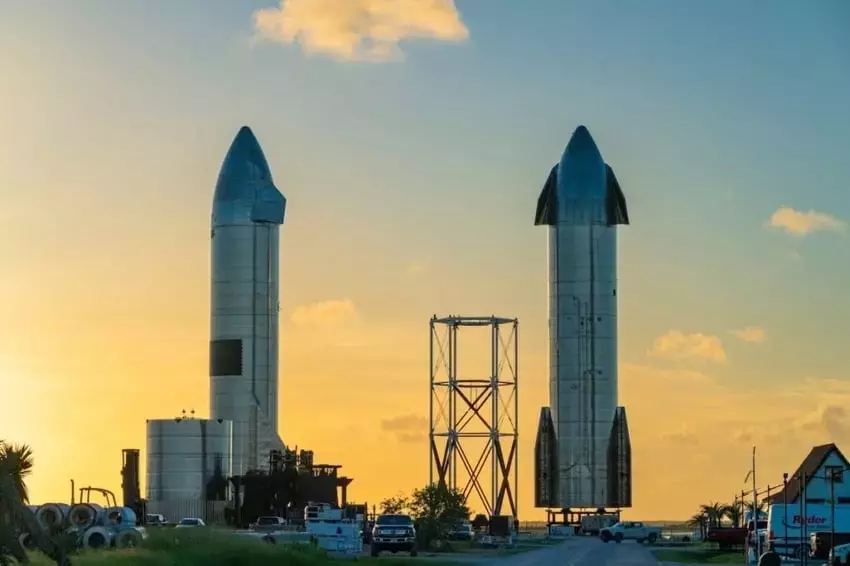
SpaceX's ambitious Starship program faces a temporary setback as the Federal Aviation Administration (FAA) launches a formal investigation into a recent test flight anomaly. The incident involved the Super Heavy booster, which experienced an engine malfunction during its return to Earth, resulting in an uncontrolled descent into the Gulf of Mexico. This investigation highlights the rigorous safety protocols surrounding space launches and underscores the complexities of developing next-generation reusable rocket technology.
FAA Initiates Probe into Starship V3 Booster Failure
On May 27, 2026, the Federal Aviation Administration announced a comprehensive investigation into what it termed a 'mishap' during a Starship test flight conducted last week. The incident specifically concerned the mega rocket's first-stage Super Heavy booster. Following a successful liftoff from Boca Chica, Texas, and a planned separation, the booster's engines unexpectedly failed during its descent. Instead of executing a controlled splashdown in the Gulf of Mexico, it impacted the water forcefully. Fortunately, the FAA reported no injuries or damage to public property resulting from this event.
Meanwhile, the Starship spacecraft itself continued its mission, deploying 20 simulated satellites and concluding its journey with a fiery re-entry and splashdown in the Indian Ocean. The FAA has confirmed its supervisory role over SpaceX's internal investigation, emphasizing that no further Starship launches will be permitted until the company's final report is approved and all required corrective measures are implemented.
This third iteration of the Starship vehicle incorporated significant design modifications, including enhancements to the booster, the introduction of new third-generation Raptor engines, and various spacecraft upgrades. These changes were aimed at improving reliability following eleven previous test flights. Despite these efforts, the recent anomaly underscores the inherent challenges in pushing the boundaries of space exploration technology.
The importance of the Starship program to SpaceX, led by CEO Elon Musk, cannot be overstated. It is envisioned as the cornerstone for expanding spaceflight capabilities, with a long-term goal of facilitating human missions to Mars. Furthermore, NASA plans to utilize a modified version of Starship for lunar landings as part of its Artemis program. The development of reliable, reusable rocket technology is also crucial for reducing the cost of launching heavy payloads into space, directly supporting the expansion of Starlink, SpaceX's most significant revenue generator and currently its only profitable venture. This incident follows closely on the heels of Blue Origin's New Glenn rocket being cleared for flight after an earlier grounding, highlighting the dynamic and competitive landscape of the private space sector.
Navigating the Frontiers of Space Exploration: A Call for Resilience and Innovation
The recent Starship booster mishap serves as a powerful reminder of the relentless pursuit of innovation in space exploration. While setbacks are an inevitable part of pushing technological boundaries, they also provide invaluable learning opportunities. The FAA's diligent oversight ensures that safety remains paramount, even as companies like SpaceX strive to achieve ambitious goals that could redefine humanity's presence in the cosmos. This incident reinforces the idea that true progress demands not only audacious vision but also meticulous attention to detail, robust engineering, and a commitment to continuous improvement. As we look towards a future of interplanetary travel and expanded space infrastructure, the ability to learn from failures and adapt swiftly will be the ultimate determinant of success.