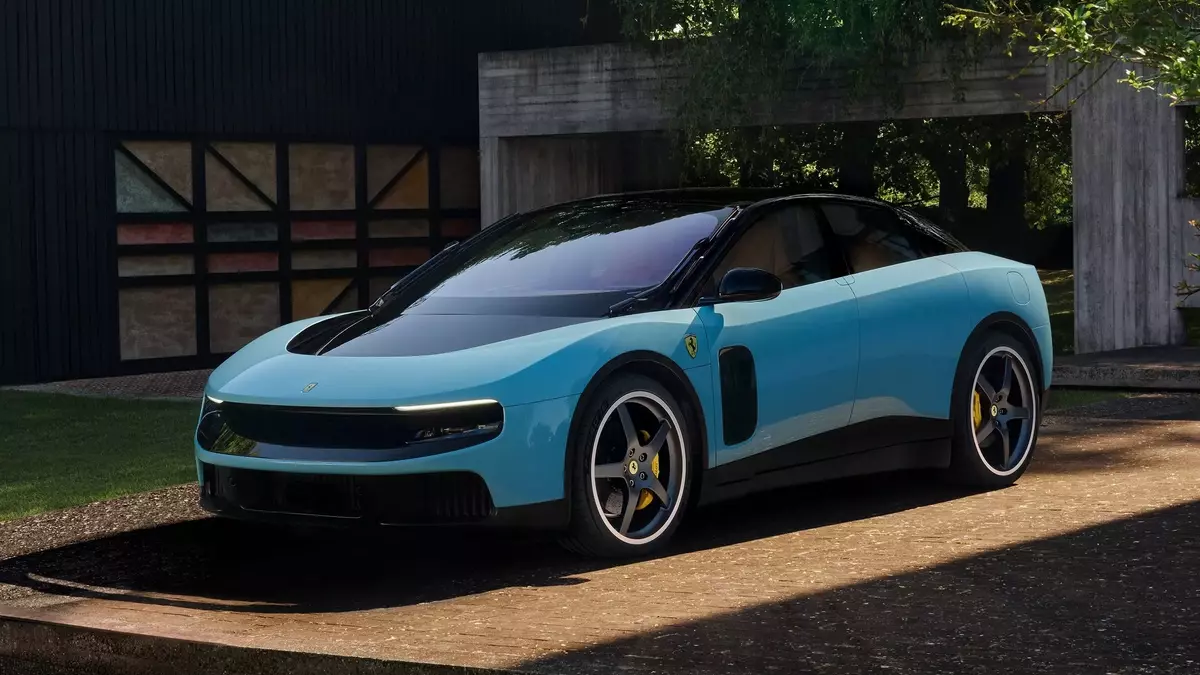
Ferrari has officially unveiled its highly anticipated and, for some, controversial first electric vehicle, the 2027 Luce. This revolutionary model not only marks a significant shift in the brand's powertrain philosophy but also introduces a daring new aesthetic, pushing the boundaries of traditional Ferrari design. With an impressive 1035 horsepower delivered by a sophisticated four-motor electric system, the Luce is engineered to deliver breathtaking performance while embracing a new era of sustainable luxury. Its unique design, both inside and out, reflects a bold vision for the future of the iconic Italian marque.
Ferrari's Bold Leap into Electric Future with 2027 Luce
In a momentous announcement, Ferrari pulled back the curtain on its most audacious creation to date, the 2027 Luce EV, an electric vehicle that is set to challenge perceptions and redefine the brand's legacy. This pioneering model, which emerged after extensive development, represents a dramatic departure from Ferrari's storied internal combustion engine heritage. Its innovative design, characterized by a striking form factor, was meticulously crafted by the renowned external design firm LoveFrom, under the visionary leadership of product-design giants Jony Ive and Marc Newson. Leveraging a bespoke EV architecture, the Luce's exterior and interior spaces were conceived with unparalleled creative freedom, resulting in a vehicle that stands apart from any previous Ferrari. Measuring an impressive 197.9 inches in length, the Luce subtly surpasses the Purosangue by two inches, while its height of 60.8 inches positions it slightly lower, contributing to its distinctive profile. The cabin is positioned forward within its all-aluminum structure, featuring unique center-opening doors and a practical rear liftgate. Its advanced aerodynamic profile, achieved through elements like tunnel-like spoilers and active grille shutters, boasts a drag coefficient lower than any preceding road-legal Ferrari.
The interior of the Luce, predicted to be universally acclaimed, seamlessly merges physical controls with advanced digital displays. It offers a spacious five-seat configuration, a first for Ferrari, enabled by the absence of a central tunnel and rear transaxles. The generously sized trunk under the rear liftgate is also the largest ever found in a Ferrari. The cabin's technological sophistication is understated, featuring OLED displays where traditional dials are reimagined as digital interfaces within a larger digital canvas. These include a central display for speed and battery charge, a left dial showing power and regenerative braking levels, and a configurable right dial. The instrument cluster thoughtfully adjusts with the steering column. A central touchscreen, capable of pivoting towards either front occupant, integrates tactile physical switches, complemented by a similar setup for rear passengers at the back of the center console. Notably, the steering wheel features conventional switchgear, including two Manettino dials for standard and electric powertrain control, moving away from the Purosangue's touchpads. Large paddles on the steering wheel allow drivers to control regenerative braking and torque output, mimicking the engagement of traditional gear changes.
Powering the Luce are four bespoke synchronous permanent-magnet electric motors, strategically biased towards the rear. The front motors deliver 282 horsepower, while the rear pair provides a formidable 831 horsepower, culminating in a combined output of 1035 horsepower—surpassing any previous road-legal Ferrari. Despite its 4982-pound curb weight, the Luce accelerates from 0 to 62 mph in a blistering 2.5 seconds and reaches 124 mph in just 6.8 seconds, with a top speed of 193 mph. A 'launch mode', activated via an overhead pull handle, optimizes traction and provides an additional 54 horsepower boost. The innovative paddle system allows for five levels of regenerative braking and five stages of torque delivery, designed to replicate the dynamic feel of traditional downshifts and upshifts. A 'torque meter' above the speedometer guides the driver to optimal torque flow, akin to a traditional shift indicator.
Addressing the critical aspect of sound, Gianmaria Fulgenzi, Chief Product Development Officer, emphasized the significant challenge of creating an authentic auditory experience. Instead of artificial sound synthesis, Ferrari patented a system that amplifies and processes mechanical noise from the rear axle. The intensity of this auditory feedback varies with the selected e-Manettino mode: 'Perfo' offers maximum sound, 'Tour' provides a mid-level soundscape, and 'Range' is the quietest. This sound is also projected externally, ensuring the Luce retains a distinctive Ferrari roar. The vehicle's structural 122-kWh battery pack, designed and manufactured in-house, supports an 800-volt architecture, allowing for rapid charging at up to 350 kW. Ferrari estimates a WLTP range of 330 miles, translating to approximately 280 miles under EPA methodology. The chassis features four-wheel steering and an active suspension system, a refined version of those found in the F80 and Purosangue, offering full torque vectoring across both axles. The braking system includes substantial 15.4-inch front and 14.6-inch rear rotors. The Luce rides on staggered 23x9.5-inch front and 24x11.0-inch rear wheels—the largest ever fitted to a road-going Ferrari—available in classic five-spoke and aero-optimized turbine designs.
Scheduled for a European launch later this year at approximately 550,000 euros (roughly $640,000 USD), the Luce is expected to arrive in the United States in the second quarter of 2027, with U.S. pricing yet to be announced. This gradual rollout is a deliberate strategy to acclimate the market to the concept of an electric Ferrari. While Ferrari has fully committed to this ambitious project, the market's response to ultra-high-end electric vehicles remains uncertain, as evidenced by recent decisions from other luxury brands. Ferrari Executive Chairman John Elkann’s statement, "We are expanding what Ferrari can be, not losing what Ferrari is," encapsulates the brand's delicate balance between innovation and heritage. The ultimate verdict on whether the Ferraristi embrace this new, electrified future will unfold as the Luce makes its global debut.
A New Dawn for Automotive Excellence: Reflecting on Ferrari's Electric Evolution
The introduction of the Ferrari Luce EV represents a pivotal moment not just for Ferrari, but for the entire luxury automotive industry. This bold step into electrification signifies a profound commitment to innovation and sustainability, all while striving to maintain the core emotional connection synonymous with the Ferrari brand. It challenges established norms and demonstrates that even the most tradition-bound marques are willing to adapt and redefine themselves in the face of evolving technological landscapes. For enthusiasts and industry observers alike, the Luce prompts a fascinating discussion: can the electrifying performance of a supercar truly capture the raw passion and visceral engagement that a roaring V12 once offered? Ferrari’s approach to crafting a unique, authentic sound profile from mechanical movements rather than artificial synthesis highlights a thoughtful consideration of this challenge. Furthermore, the collaboration with design maestros Jony Ive and Marc Newson underscores the growing importance of seamless integration between technology, design, and user experience. As the automotive world rapidly electrifies, the Luce serves as a testament to the potential for innovation to elevate and expand the very definition of automotive excellence, raising crucial questions about the future of luxury, performance, and environmental responsibility on the world's most iconic roadways.