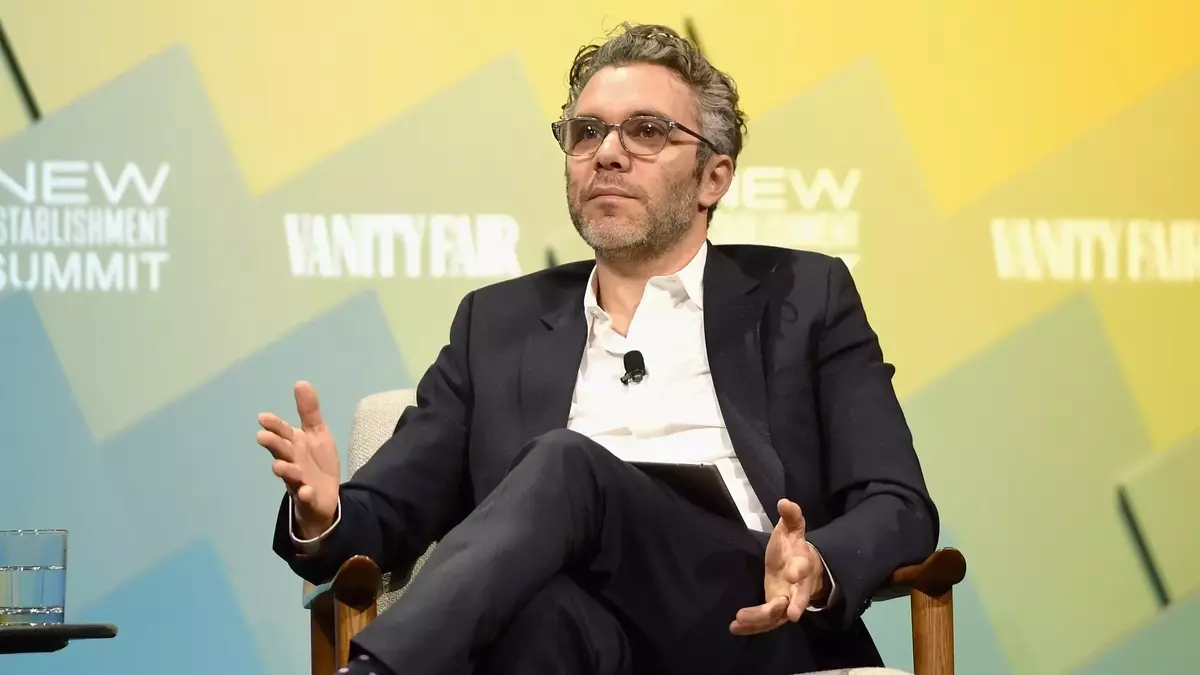
CBS News is undergoing a significant transformation, with its flagship program '60 Minutes' at the forefront of these changes. Bari Weiss, the network's editor-in-chief, has appointed Nick Bilton, a distinguished features journalist, as the new executive producer. This strategic move signals a new era for the long-running newsmagazine, aiming to refresh its content and expand its audience engagement. The shift has also resulted in the exit of several key personnel, including long-time executive producer Tanya Simon and correspondents Cecilia Vega and Sharyn Alfonsi, indicating a clear directive to usher in fresh perspectives and innovative approaches.
The strategic changes within '60 Minutes' were set in motion by Bari Weiss, who assumed leadership at CBS News last October. Her vision aligns with the broader objectives of Paramount CEO David Ellison's new ownership, which seeks to modernize the program while preserving its core journalistic integrity. Back in February, The Hollywood Reporter had already hinted at the impending shake-up, underscoring the anticipation surrounding Weiss's plans for the highly-rated news show.
In a public statement, Weiss lauded Bilton as an 'entrepreneurial journalist' and an ideal leader to navigate '60 Minutes' into new territory. She articulated a bold ambition for the program: to achieve unparalleled heights through profound, investigative journalism that uncovers truths, exposes wrongdoing, broadens public understanding, and holds powerful institutions accountable. Bilton's extensive background in investigative reporting and his grasp of contemporary technological trends are expected to be instrumental in realizing this mission, ensuring that the program's crucial journalism resonates with a diverse audience across multiple platforms.
Tanya Simon, who dedicated 25 years to CBS News and '60 Minutes', confirmed her departure in a memo to staff. Despite the leadership's decision to pursue a new direction, Simon expressed immense pride in the collective achievements during her tenure, highlighting the program's commitment to independence, resilience, and the relentless pursuit of truth. She noted that '60 Minutes' saw a 9% increase in ratings over the past year, a testament to the team's hard work and dedication.
The selection of Bilton, an outsider to traditional TV news, came as a surprise to many within CBS. Known for his investigative tech features in Vanity Fair and best-selling books such as 'Hatching Twitter' and 'American Kingpin,' Bilton also has experience in documentary filmmaking, having directed HBO's 'Fake Famous' and produced 'The Inventor: Out for Blood in Silicon Valley.' His unique background suggests a fresh perspective on news production, blending in-depth storytelling with an understanding of modern media consumption habits.
In his message to the staff, Bilton articulated his intent to lead the show forward rather than merely maintain its status quo. He emphasized the importance of acknowledging what works while being candid about areas needing improvement. His immediate plans involve engaging with the team and reconvening in the summer to strategize the program's future direction. A key focus will be to expand the '60 Minutes' brand beyond its traditional one-hour weekly broadcast, leveraging new platforms to reach a wider audience.
CBS News president Tom Cibrowski reinforced this vision, stating that Bilton's hiring is part of a deliberate strategy to transform '60 Minutes' into a comprehensive, 360-degree product. The goal is to deliver impactful journalism that honors the existing viewership while attracting new audiences, enabling viewers to engage with their work across all available mediums. This bold move, particularly when other network news segments are struggling, represents a significant risk but also a potential opportunity for revitalization within CBS News.
The appointment of Nick Bilton signifies a pivotal moment for '60 Minutes' and CBS News. The network is clearly intent on re-imagining its approach to news delivery, aiming for a future where its iconic program not only continues its legacy of profound journalism but also adapts to the evolving media landscape by embracing new technologies and reaching audiences on diverse platforms. This strategic shift underscores a commitment to innovation and broader engagement in an increasingly competitive media environment.